If you are planning a trip from Delhi to Sonipat, you probably want quick, reliable answers. How far is it? How long will it take? What is the best way to get there? This guide answers all of that in plain language, based on verified road data and real travel conditions, so you can plan your journey with confidence.
Delhi to Sonipat Distance at a Glance
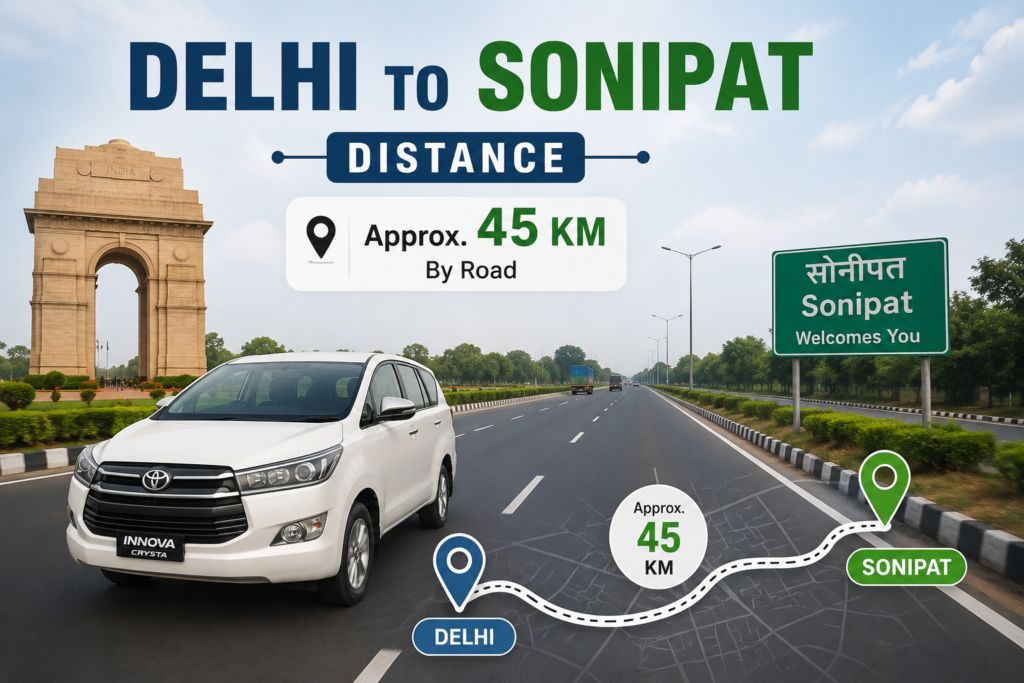
The distance between Delhi and Sonipat is approximately 45 km by road, mainly via NH-44, which most people still know as GT Road. Depending on your exact starting point in Delhi and the traffic on any given day, the driving distance can range between 44 km and 51 km.
The straight line distance, sometimes called the aerial or as the crow flies distance, is shorter at around 33 to 40 km. But since roads curve and pass through toll points, traffic signals, and built up areas, the actual distance you will cover in a car or cab is the 45 km figure.
Here is a quick summary table for reference.
| Detail | Approximate Value |
|---|---|
| Road distance | 44 to 45 km |
| Straight line distance | 33 to 40 km |
| Driving time (normal traffic) | 45 to 75 minutes |
| Main route | NH-44 (GT Road) |
| Alternate route | NH-709A |
| Direction from Delhi | North, towards Haryana |
How Long Does It Take to Travel from Delhi to Sonipat
Under normal traffic conditions, the drive from Delhi to Sonipat takes about 45 minutes to an hour on NH-44. During peak hours, especially in the morning between 8 and 10 AM and in the evening between 6 and 9 PM, the same journey can stretch to 75 or even 90 minutes because of congestion near Azadpur, Mukarba Chowk, and the Delhi border checkpoints.
If your plan allows flexibility, starting early in the morning, ideally before 7 AM, is the smartest way to beat traffic and reach Sonipat in well under an hour. Early morning departures also mean cooler weather for the drive, which matters a lot during Delhi summers.
The Main Route: NH-44 (GT Road)
NH-44 is the fastest and most commonly used route between Delhi and Sonipat. This is the same historic Grand Trunk Road that has connected northern India for centuries, now upgraded into a modern, well maintained national highway.
The route typically looks like this from central and north Delhi:
- Start from your pickup point in Delhi and head towards Mukarba Chowk.
- Merge onto NH-44 heading north.
- Pass through Alipur and cross the Delhi-Haryana border.
- Continue through Murthal.
- Arrive in Sonipat.
The road is wide, largely well surfaced, and has clear signage, which makes it a comfortable drive even for those who are not familiar with the area. Toll charges apply on this stretch and are collected via FASTag, so if you are self-driving, make sure your FASTag is active and has sufficient balance.
Alternate Route: NH-709A
A second option is via NH-709A, which takes a slightly longer time, usually around 5 to 10 minutes more than the NH-44 route. This road can be useful when there is heavy congestion or road work on GT Road, or during specific events that cause diversions near the border.
If you are traveling with a professional driver, they will usually monitor live traffic and choose whichever route is faster on that particular day, so you do not need to worry about picking the right road yourself.
Famous Stop Along the Way: Murthal
No trip on this route is complete without a mention of Murthal, a small town that has become genuinely famous across North India for its dhabas. If you have even a few extra minutes, a stop here is well worth it.
Murthal is known for:
- Fresh, hot parathas served with generous portions of butter and curd
- Traditional Punjabi thalis
- Lassi that is thick, sweet, and served in large glasses
- A roadside dhaba culture that has been part of highway travel for decades
Many travelers heading from Delhi to Sonipat, Chandigarh, or further into Punjab and Haryana deliberately plan their trip around a stop at Murthal, either for breakfast on an early morning departure or a hearty meal on the return leg.
Modes of Transport from Delhi to Sonipat
There is more than one way to make this journey, and each has its own advantages depending on your priorities around cost, comfort, and time.
By Cab or Private Car
A private cab remains the most flexible and comfortable choice for this route. You get door to door pickup and drop, no waiting for scheduled departures, and the freedom to stop wherever you like, whether that is Murthal for food or anywhere else along the way. For families, business travelers, or anyone carrying luggage, a private cab removes the stress of coordinating public transport schedules.
By Bus
Several state run and private bus operators run frequent services between Delhi and Sonipat. Buses are budget friendly and run throughout the day, but you are bound by fixed timings and fixed stops, and comfort levels vary depending on the operator and bus type.
By Train
Sonipat has decent rail connectivity to Delhi, with multiple trains passing through daily. Train travel can be efficient if the timing matches your schedule, though the nearest railway station may still require additional local transport on either end of your journey.
By Self-Drive
If you enjoy driving and already have a vehicle, self-driving on NH-44 is straightforward given the quality of the road. Just factor in toll costs, fuel costs, and the mental effort of navigating Delhi traffic before you hit the open highway.
Why a Private Cab Makes the Most Sense for This Route
Given that the distance is short, at around 45 km, but traffic patterns near the Delhi border can be unpredictable, a private cab genuinely offers the best balance of comfort, time efficiency, and value. Here is why so many travelers on this route choose to book a cab instead of self-driving or relying on public transport.
No stress about parking or navigation. Delhi’s roads near the border and industrial areas can be confusing for first time visitors. A professional driver who knows the route removes this entirely.
Door to door convenience. You get picked up from your exact location in Delhi and dropped exactly where you need to be in Sonipat, whether that is a college, an industrial area, a residential address, or a business meeting.
Flexible stops. Want to stop at Murthal for breakfast? Need a quick break for fuel or a washroom? A private cab lets you do this without any hassle.
Better for groups and families. If you are traveling with family, colleagues, or friends, a private vehicle is more comfortable and often more economical per person than splitting into multiple bus or train tickets.
Predictable, transparent pricing. A trusted operator gives you a fixed fare upfront, so there are no surprises at the end of your journey.
This is exactly where Innova Taxi fits in. As a Delhi NCR based cab and outstation taxi service, InnovaTaxi specializes in routes just like Delhi to Sonipat, offering well maintained vehicles, experienced local drivers, and straightforward, transparent fares. Whether you need a quick one way drop or a round trip with waiting time built in, InnovaTaxi’s fleet is built to handle both short NCR runs and longer outstation journeys with the same level of reliability.
Vehicle Options for the Delhi to Sonipat Route
Choosing the right vehicle for this trip depends mainly on group size and luggage.
Sedan (Swift Dzire, Etios, or similar): Ideal for solo travelers, couples, or small groups of up to three people. This is usually the most economical option for a short 45 km run.
SUV (Innova Crysta, Ertiga, or similar): A better fit for families of five to seven, or anyone carrying more luggage. SUVs offer more legroom and boot space, which matters if you are heading to Sonipat for a longer stay rather than a day trip.
Tempo Traveller: Best suited for larger groups, such as college batches, office teams, or extended families traveling together for an event.
Whatever your group size, checking with a provider like InnovaTaxi ahead of time helps you lock in the right vehicle and avoid last minute scrambling, especially during busy periods.
Toll and Fuel Costs to Keep in Mind
If you are self-driving, it helps to budget for toll charges on the NH-44 stretch, which are collected via FASTag at designated plazas. Fuel costs for a 45 km one way trip are relatively modest, though exact figures depend on current fuel prices and your vehicle’s mileage.
If you book a cab instead, a good operator will typically build tolls into the final invoice so you know your total cost upfront rather than being surprised by add-on charges after the trip.
Best Time to Travel from Delhi to Sonipat
This route is drivable year round, and there is no single season that is off limits. That said, a few practical tips can improve your experience:
- Summer (April to June): Travel early morning or later in the evening to avoid the peak heat, and make sure your vehicle’s air conditioning is working well.
- Monsoon (July to September): Roads can get slippery in heavy rain, so allow extra time and avoid unnecessary speed.
- Winter (November to January): Fog can be a factor on early morning drives, particularly in December and January. Starting slightly later in the morning, once visibility improves, is often safer.
- Post-monsoon and early winter (October to November): Generally considered the most pleasant time to travel, with clear skies and comfortable temperatures.
Regardless of season, starting your journey early in the day remains the single most effective way to avoid Delhi’s notorious traffic congestion.
Why Sonipat Is Worth the Trip
Sonipat is not just a highway pass through town. It is a growing city in Haryana, part of the National Capital Region, known for its educational institutions, industrial base, and proximity to Delhi. Many travelers head here for university visits, business meetings, family functions, or simply as a quick escape from the city.
Its location right on GT Road also makes it a natural stopover point for people continuing further north towards Panipat, Karnal, or Chandigarh, which adds to its steady flow of daily travelers.
Frequently Asked Questions
What is the exact distance between Delhi and Sonipat?
The road distance is approximately 44 to 45 km, while the straight line distance is around 33 to 40 km depending on the exact points measured.
How long does the drive take?
Under normal conditions, expect 45 minutes to an hour. During peak traffic hours, this can extend to 75 to 90 minutes.
Which is the best route?
NH-44 (GT Road) is the fastest and most commonly used route. NH-709A is a reliable alternate if there is congestion or road work on GT Road.
Is it better to book a one way cab or a round trip?
If you only need a single drop, a one way cab is usually the more economical choice since you are not paying for the return leg. If you plan to return the same day or need the cab to wait, a round trip booking with an operator like InnovaTaxi can work out more convenient.
Are there good stops on the way?
Yes, Murthal is the standout stop on this route, known widely for its dhaba food, especially parathas and lassi.
Is the road safe for a self-drive trip?
Yes, NH-44 is a well maintained national highway with clear signage. Standard highway driving precautions apply, especially during monsoon and foggy winter mornings.
Final Thoughts
The trip from Delhi to Sonipat is short, well connected, and manageable within an hour under normal traffic. Whether you choose to self-drive, take a bus, catch a train, or book a private cab, the key factors that will shape your experience are timing, route choice, and the vehicle you travel in.
For most travelers, a private cab strikes the right balance of comfort, convenience, and predictable cost, especially when picking a provider that knows the Delhi NCR region well. If you want a hassle free journey with a professional driver, transparent fares, and a choice of vehicles suited to your group size, InnovaTaxi offers dependable cab and outstation taxi services across Delhi NCR, including this exact Delhi to Sonipat route.
Plan ahead, start early where possible, and enjoy the short but scenic drive up NH-44 towards Sonipat.

Gagan Panwar is Content Lead at InnovaTaxi, where he writes route and travel guides based on firsthand input from the company’s driver network covering Delhi’s major outstation corridors, including the Jammu–Vaishno Devi route.