Roorkee is one of the most visited towns in Uttarakhand, known for hosting IIT Roorkee, one of India’s oldest and most respected engineering institutes. Many travelers head to Roorkee for admissions, campus visits, business trips, or as a stopover before continuing to Haridwar and Rishikesh. If you are planning this journey, knowing the exact distance, travel time, route conditions, and the best way to book a cab can save you both time and money.
This guide covers everything you need to know about traveling from Delhi to Roorkee by road, including distance, driving time, route options, cost comparisons, and practical tips for a comfortable trip. The information here is compiled from official highway route data, publicly available distance calculators, and real travel patterns observed by outstation cab operators serving this corridor regularly, so you can plan your trip with confidence rather than relying on guesswork.
Roorkee’s importance as a travel destination goes beyond its academic reputation. The town sits close to the foothills of the Himalayas, which makes it a natural gateway for travelers heading toward Haridwar, Rishikesh, and other parts of Uttarakhand. Understanding the road conditions and timing for this route is therefore useful not just for a single visit, but for anyone who may make this trip more than once, such as parents visiting a child studying at IIT Roorkee or professionals with recurring work in the region.
Delhi to Roorkee Distance at a Glance
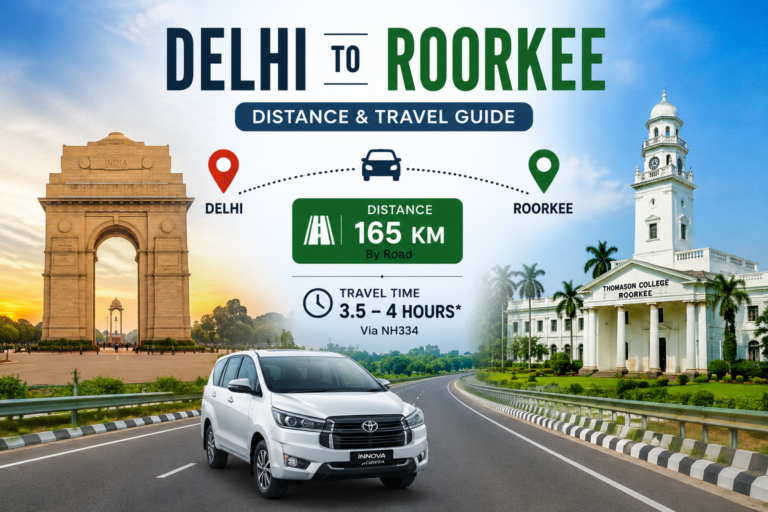
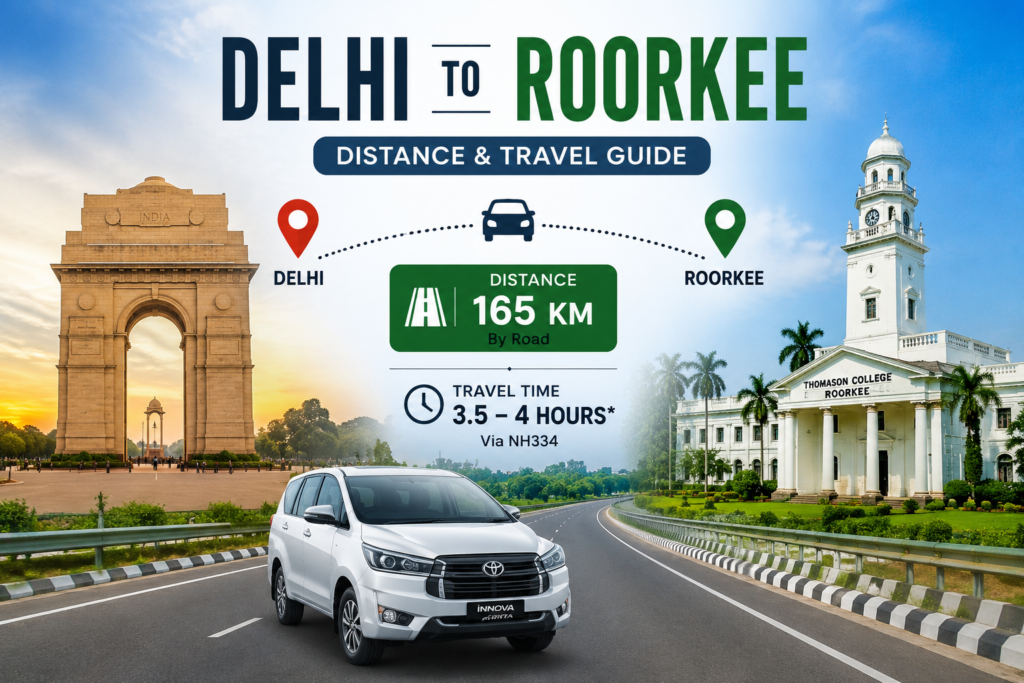
The distance between Delhi and Roorkee is approximately 172 kilometers by road. Depending on the exact route taken and traffic conditions, this distance can range between 170 km and 190 km. The average driving time is around 3.5 to 4 hours, though this can extend during peak traffic hours near Meerut and Muzaffarnagar or during winter fog conditions.
| Detail | Information |
|---|---|
| Distance by road | Approx. 172 km |
| Travel time by car | 3.5 to 4 hours |
| Main route | NH58 / NH334 via Meerut and Muzaffarnagar |
| Alternate route | Via Baghpat and Shamli |
| Best time to travel | October to March (avoid heavy monsoon months) |
| Nearest railway station | Roorkee Railway Station |
| Nearest airport | Jolly Grant Airport, Dehradun |
This table gives a quick snapshot, but the actual experience of the journey depends heavily on the route you choose, the vehicle you travel in, and the time of year.
It is worth noting that distance figures for this route vary slightly across different sources. Some road distance calculators list the figure closer to 170 km, while a few list it as high as 190 km depending on whether they measure straight line distance or actual driving distance along the highway. The 172 km figure used in this guide reflects the most commonly cited driving distance along the primary highway route and is a reliable number to use for planning purposes. Toll charges on this route are generally modest, typically ranging between 150 and 250 rupees one way depending on the vehicle category, and are usually included in the total taxi fare quoted by cab operators.
Route Options from Delhi to Roorkee
There are two commonly used routes for this journey, and picking the right one can make a noticeable difference in your travel time.
Route 1: Via Meerut and Muzaffarnagar (NH58/NH334)
This is the most popular and widely used route. It runs through Meerut, a well-developed city with good road infrastructure, and continues through Muzaffarnagar before reaching Roorkee. The roads on this stretch are generally well maintained, with multiple fuel stations, dhabas, and rest stops along the way. Most taxi operators, including InnovaTaxi, recommend this route because it balances speed with road quality.
Route 2: Via Baghpat and Shamli
This alternate route is slightly longer in some cases but can be useful if there is heavy congestion on the primary highway, particularly during festival seasons or long weekends. It passes through smaller towns and may have narrower stretches in certain sections, so it is generally used as a backup option rather than the default choice.
Both routes are drivable throughout the year, though the Meerut-Muzaffarnagar route is generally preferred for its highway quality and better connectivity.
How the Route Breaks Down Section by Section
Understanding the journey in segments can help you plan breaks and estimate arrival time more accurately.
The first stretch out of Delhi involves navigating city traffic before merging onto the highway, which usually takes 30 to 45 minutes depending on your starting point within Delhi NCR. Once on the highway, the drive to Meerut typically takes about an hour and covers roughly 70 km. From Meerut to Muzaffarnagar is a shorter stretch of around 40 km, usually completed in 45 minutes to an hour. The final leg from Muzaffarnagar to Roorkee covers the remaining distance and generally takes just under an hour, bringing the total driving time to around 3.5 to 4 hours under normal traffic conditions.
Knowing this breakdown is particularly useful if you are planning a stop for food or fuel, since Meerut and Muzaffarnagar both offer reliable options roughly at the midpoint of the journey.
Best Time to Travel from Delhi to Roorkee
Timing your trip well can make a real difference in comfort and safety.
Winter months (November to February): This period sees pleasant weather during the day, but early morning and late evening fog can significantly slow down traffic, especially near Muzaffarnagar. If you are traveling early morning, factor in extra time.
Summer months (April to June): Daytime temperatures can be high, so traveling early morning or in the evening is advisable. Make sure your vehicle has functioning air conditioning for a comfortable ride.
Monsoon season (July to September): Certain stretches near Muzaffarnagar and low-lying areas can experience waterlogging during heavy rains. It is best to check road conditions before starting the trip during this period.
Exam and admission season: Since Roorkee is home to IIT Roorkee, the months around counseling and admission season see a spike in travel demand. Booking your taxi in advance during this period is a good idea to avoid last minute unavailability.
A Quick Look at Seasonal Travel Conditions
| Season | Months | What to Expect |
|---|---|---|
| Winter | November to February | Cool weather during the day, fog delays possible early morning and late evening |
| Summer | April to June | High daytime temperatures, best to travel early morning or evening |
| Monsoon | July to September | Possible waterlogging near low lying stretches, check conditions before departure |
| Autumn/Spring | October, March | Generally the most pleasant and predictable travel conditions |
Travelers who are flexible with their dates often find October, March, and early November to be the most comfortable months for this route, since temperatures are moderate and fog related delays are minimal.
Modes of Travel: Taxi vs Train vs Bus vs Self-Drive
Choosing the right mode of transport depends on your priorities, whether that is cost, comfort, flexibility, or travel time.
Pros and Cons of Taking a Taxi
Pros:
- Door to door convenience with no need to arrange local transport at either end
- Flexible departure time that fits your schedule rather than a fixed timetable
- Comfortable for families, students moving luggage, or groups traveling together
- Ability to make stops along the way for food, rest, or sightseeing
- Privacy and safety, especially useful for late night or early morning departures
Cons:
- Generally costs more than train or bus travel for solo travelers
- Travel time can vary based on traffic and road conditions
- Requires advance booking during peak seasons to secure the right vehicle
Pros and Cons of Taking a Train
Pros:
- Economical option, especially for budget conscious travelers
- Reliable timing that is less affected by road traffic
- Comfortable for long distances with reserved seating
Cons:
- Requires additional local transport from the station to the final destination
- Limited flexibility, since you are bound by fixed schedules
- Advance booking is often necessary, particularly during peak travel periods
Pros and Cons of Taking a Bus
Pros:
- Most economical option among the four
- Frequent departures throughout the day
- No need to drive or navigate the route yourself
Cons:
- Less comfortable for longer journeys, especially with luggage
- Multiple stops along the way can extend the total travel time
- Limited privacy and personal space compared to a taxi
Pros and Cons of Self-Driving
Pros:
- Complete control over the schedule and stops
- No dependency on availability of other transport options
- Freedom to explore places along the route
Cons:
- Driver fatigue on a 4 hour route, especially if driving both ways in a day
- Responsibility for navigation, tolls, and vehicle maintenance during the trip
- Not ideal for travelers unfamiliar with the route or highway driving conditions
Why a Taxi is Often the Practical Choice for This Route
For a distance of around 172 km, a taxi strikes a useful balance between the affordability of public transport and the flexibility of self-driving. Families traveling with children, students moving in or out of Roorkee with luggage, and business travelers who need to reach on time without dealing with parking or navigation often find a taxi to be the more practical option.
This is where a service like Innova Taxi becomes useful. InnovaTaxi specializes in outstation cab bookings across Delhi NCR, offering a range of vehicles from sedans to Innova SUVs, which are particularly well suited for routes like Delhi to Roorkee where luggage space and passenger comfort both matter. Whether you are a student heading to IIT Roorkee with bags and boxes, a family visiting for a function, or a professional on a short business trip, having a dedicated vehicle and driver removes much of the uncertainty from the journey.
Experienced outstation drivers who regularly cover this corridor tend to be familiar with the small details that make a real difference, such as which stretches see traffic buildup around school and office hours in Meerut, where the cleaner rest stops are located, and how to adjust the route slightly during monsoon season if a particular section is prone to waterlogging. This kind of practical, on ground knowledge is difficult to replicate with a self-drive trip or a first time route search, and it is one of the quieter advantages of booking through an established outstation taxi service rather than arranging transport informally.
What to Check Before Booking a Taxi for This Route
Not all taxi bookings are created equal, and a few checks before confirming your ride can help avoid inconvenience later.
- Confirm whether the fare quoted is inclusive of tolls, driver allowance, and parking charges, or if these will be billed separately
- Check the vehicle type being assigned matches what was promised at the time of booking
- Ask about the cancellation and rescheduling policy in case your travel plans change
- Verify the pickup location and time in writing, especially if you are being picked up from an airport or a specific NCR locality
- For round trips, clarify whether waiting charges apply if you plan to spend more than a day in Roorkee
Fare Estimate for Delhi to Roorkee Taxi
Taxi fares for this route depend on the type of vehicle, whether you choose a one way trip or a round trip, and the season of travel. As a general guide, sedan cars tend to be the most economical for solo travelers or couples, while Innova and SUV options work better for families or groups carrying more luggage. Round trip fares are usually more economical per kilometer compared to booking two separate one way trips.
Rather than relying on unofficial estimates that vary widely across websites, it is a good practice to get a direct quote based on your travel date, vehicle preference, and pickup location. You can check current rates and book a Delhi to Roorkee taxi directly through InnovaTaxi for accurate and updated pricing.
| Vehicle Type | Suitable For | Approximate Comfort Level |
|---|---|---|
| Sedan (Dzire, Etios or similar) | Solo travelers, couples, small families | Good for light luggage and up to 3 passengers |
| Innova or Innova Crysta | Families, students with luggage, small groups | High comfort, ample boot space |
| Larger SUV / Tempo Traveller | Group travel, college move-in with multiple bags | Best for 6 or more passengers with heavy luggage |
Choosing the right vehicle category upfront, rather than adjusting after booking, usually results in a smoother experience and avoids last minute vehicle changes on the day of travel.
Places to Stop Along the Way
The Delhi to Roorkee route passes through a few towns worth knowing about, even if you are not planning a long stopover.
Meerut: A major city along the route with several eateries and fuel stations. It is a convenient place for a short break if you started early morning from Delhi.
Muzaffarnagar: Known for its jaggery production, this town also offers a good stretch of highway dhabas for a quick meal stop.
If you plan to continue further north after Roorkee, the route naturally connects toward Haridwar and Rishikesh, making it possible to combine a Roorkee visit with a short pilgrimage or leisure trip in the same journey.
Haridwar is roughly 30 km beyond Roorkee, and many travelers choose to extend their trip to include a visit to the Ganga ghats before heading back to Delhi, since the additional driving time is relatively small compared to the overall journey.
Safety Considerations for This Route
Road safety is worth planning for on any highway trip, and the Delhi to Roorkee route is no exception.
During winter, dense fog can reduce visibility significantly in the early morning hours, particularly on the stretch between Meerut and Muzaffarnagar. If you are traveling during this period, it is safer to start slightly later in the morning once visibility improves, rather than departing before sunrise.
Highway sections near Meerut can see heavier truck traffic, especially at night, so maintaining a safe following distance and avoiding overtaking in low visibility conditions is important.
Experienced drivers familiar with this route tend to be more comfortable navigating these patches, which is another reason many families prefer booking a professional taxi service over a self-drive trip for night travel.
If you are traveling with children or elderly passengers, planning at least one comfortable rest stop, ideally around Meerut or Muzaffarnagar, can make the journey noticeably more pleasant.
Tips for a Smooth Delhi to Roorkee Trip
Book in advance during peak season: If you are traveling during admission season for IIT Roorkee or around festivals, booking your taxi a few days ahead ensures better vehicle availability and pricing.
Choose the right vehicle for your group size: A sedan works well for two to three passengers with light luggage, while an Innova or larger SUV is more comfortable for families or groups with more baggage.
Start early to avoid fog and traffic: Especially during winter months, an early morning start helps you avoid both traffic congestion near Meerut and fog related delays.
Keep essential documents handy: If you are traveling for an official purpose such as college admission, keep your documents easily accessible rather than packed deep in your luggage.
Confirm pickup details clearly: Since Delhi NCR is spread across a large area, confirm your exact pickup point and time with your taxi provider to avoid last minute confusion.
Frequently Asked Questions
What is the exact distance between Delhi and Roorkee?
The road distance between Delhi and Roorkee is approximately 172 kilometers, though this can vary slightly between 170 km and 190 km depending on the specific route taken.
How long does it take to travel from Delhi to Roorkee by road?
It typically takes around 3.5 to 4 hours by car, depending on traffic conditions and the time of day you travel.
Is Roorkee well connected to Delhi?
Yes, Roorkee is well connected to Delhi through road, rail, and combined air and road options via Jolly Grant Airport in Dehradun. Road travel remains the most direct and flexible option for most travelers.
What is the best route from Delhi to Roorkee?
The route via Meerut and Muzaffarnagar on NH58/NH334 is generally considered the best option due to good road quality and better connectivity.
Is it better to book a one way or round trip taxi?
If you plan to return to Delhi within a few days, a round trip booking is usually more economical per kilometer compared to booking two separate one way taxis.
Can I book an Innova or SUV for this route?
Yes, taxi operators like InnovaTaxi offer a range of vehicles including sedans, Innova cars, and larger SUVs, allowing you to choose based on your group size and luggage requirements.
Final Thoughts
Traveling from Delhi to Roorkee is a straightforward journey covering approximately 172 kilometers, usually completed in 3.5 to 4 hours by road.
Whether you are heading to IIT Roorkee for admissions, visiting family, or continuing onward toward Haridwar and Rishikesh, choosing the right mode of transport and timing your trip well can make the experience far more comfortable.
For travelers who value convenience, flexibility, and door to door service, booking a taxi remains one of the most practical choices for this route. You can plan and book your Delhi to Roorkee cab through InnovaTaxi and choose a vehicle that fits your group size, budget, and comfort needs.

Gagan Panwar is Content Lead at InnovaTaxi, where he writes route and travel guides based on firsthand input from the company’s driver network covering Delhi’s major outstation corridors, including the Jammu–Vaishno Devi route.